
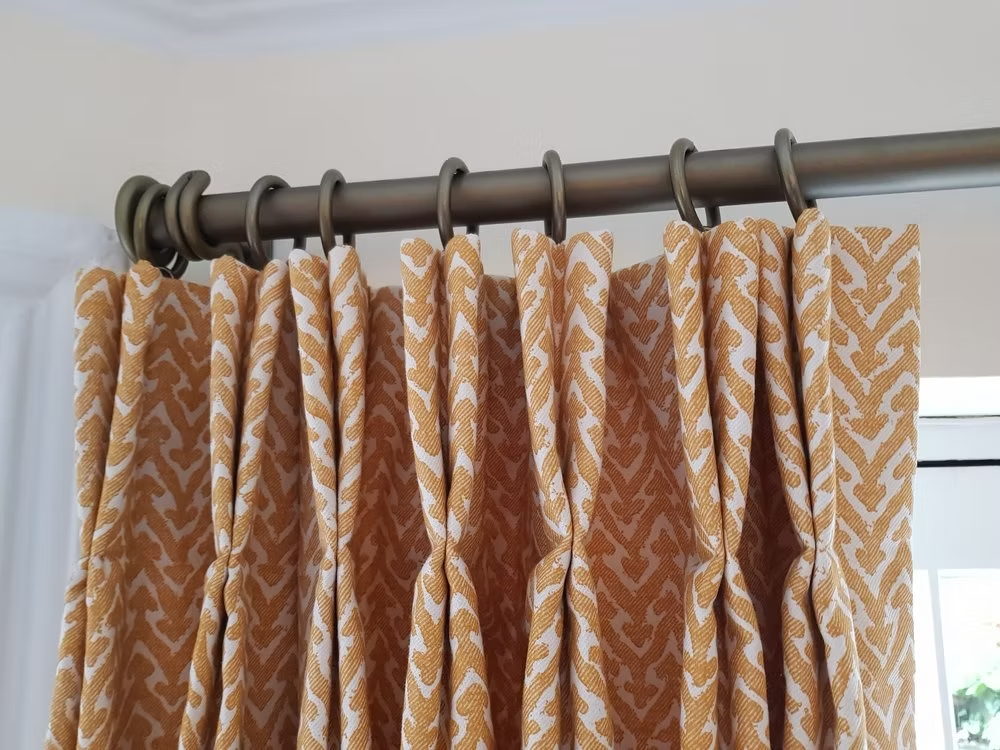
Poles, Tracks & Hardware
Curtain Hardware, Considered From The Start
The right pole or track is an integral part of the finished window. It influences how the curtains hang, where they sit when open, how they move and how the whole design works within the room.
Discuss Your Window Hardware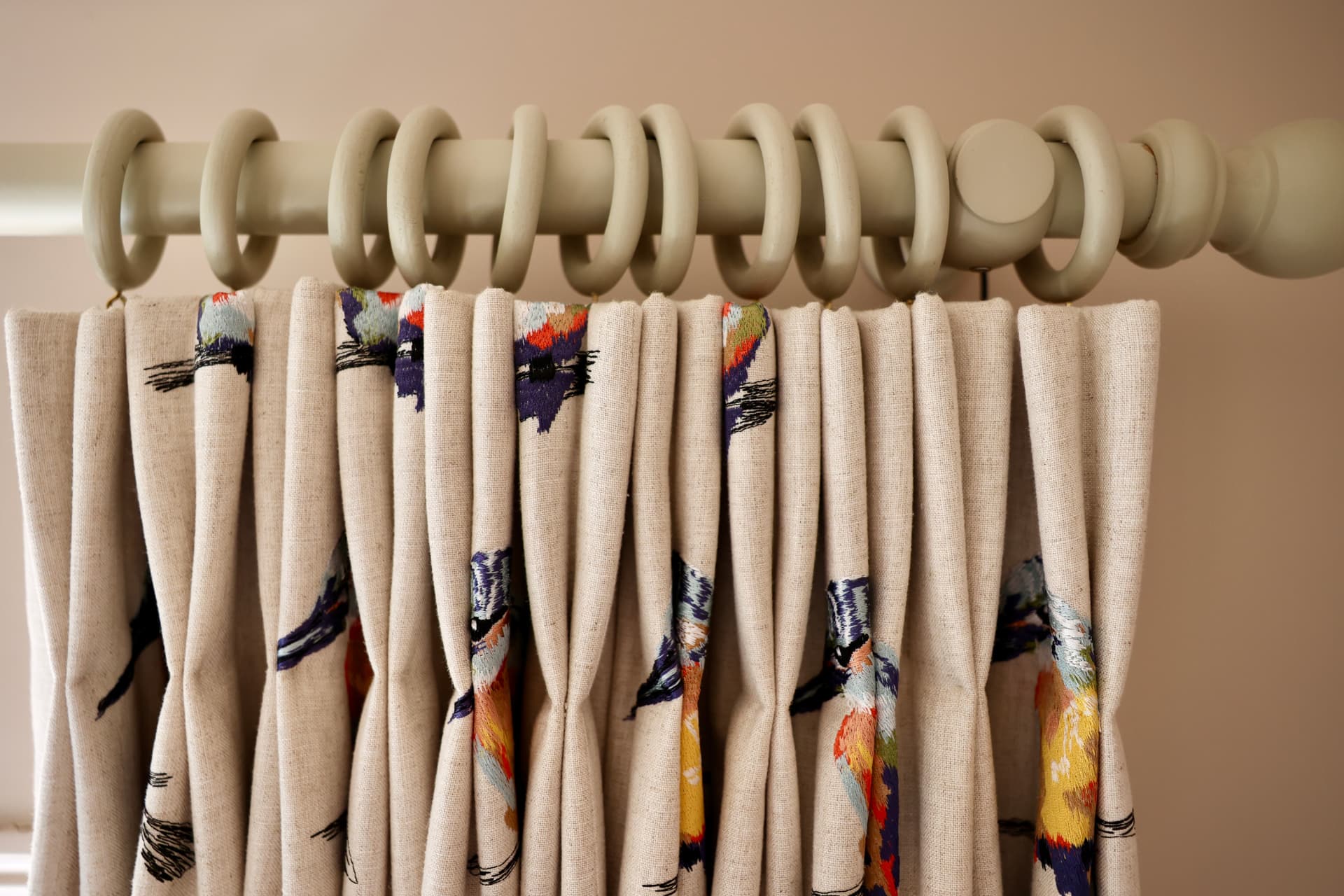
Measure · Design · Make · Install
For a bay window, an architectural feature or a more straightforward opening, the hardware can be discreet enough to almost disappear or become an intentional part of the design in its own right. It also needs to suit the way you want to operate the curtains, whether that's by hand, cord or motorisation.
Chatelaine Interiors can advise on, source and install your curtain hardware as part of the complete window design, bringing the curtains, hardware and installation together from the outset.
The Hardware Is Part Of The Design
Curtain hardware is best considered alongside the curtains themselves, before manufacture begins.
It affects how the fabric hangs, how the curtains move, where they stack when open and what is visually possible at the window.
The length of a pole or track can influence how much room the curtains have to stack beyond the glass. The bracket projection affects how the fabric clears window furniture, radiators and architectural details. The available fixing points may determine whether wall fixing, ceiling fixing or another approach is most appropriate.
We also consider what is already happening architecturally around the window, from bays and cornices to recesses, ceiling details and shadow gaps.
Specialist systems are available with wall and ceiling fixing, adjustable or custom bracket projections and recessed options. Secure fixing positions also matter
because the hardware needs to support the combined weight of the system and curtains.
Depending on the room, you may want a decorative pole that forms part of the design or a discreet track that virtually disappears and allows your curtains to take centre stage.
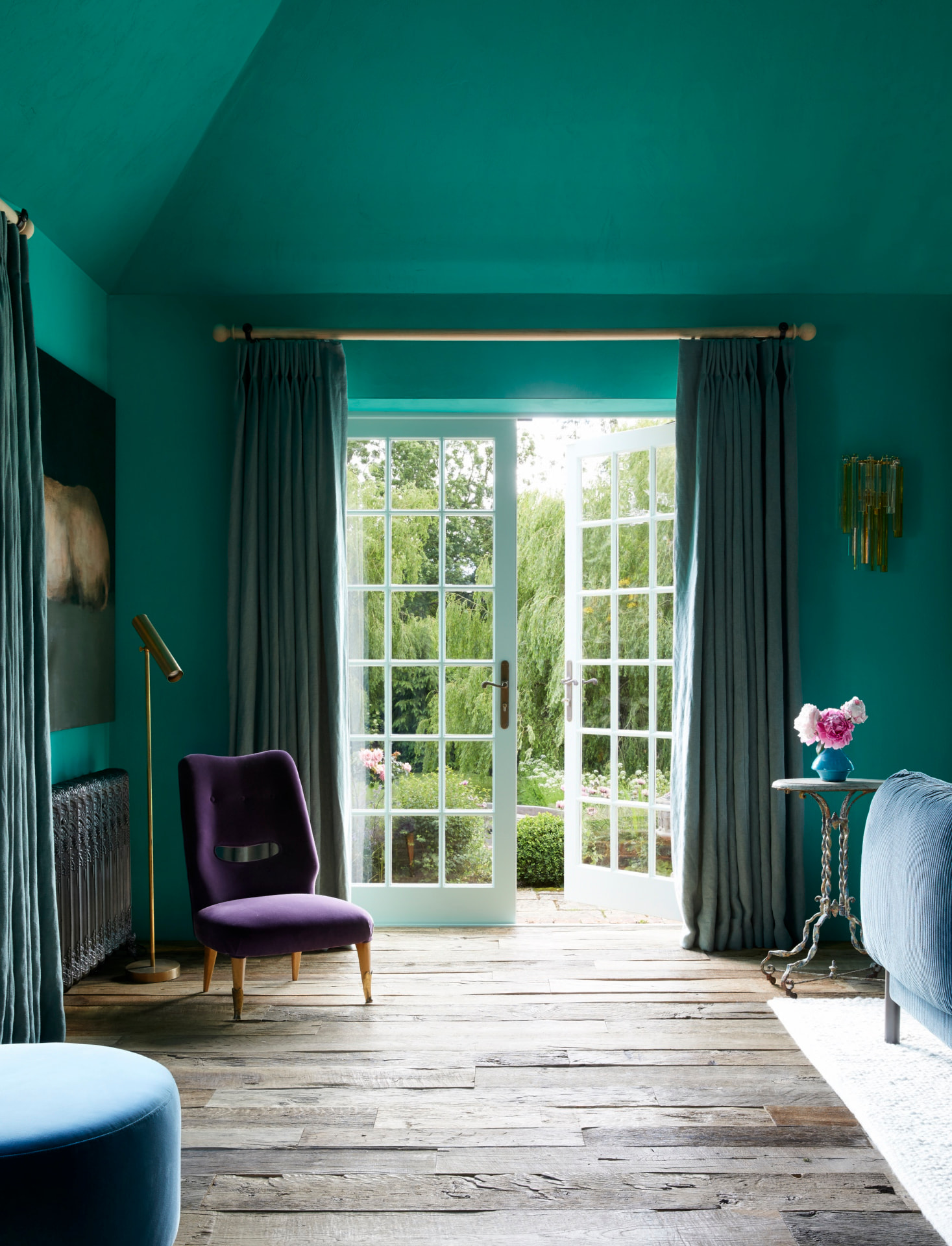
Which Pole Or Track Do You Need?
The appropriate system depends on:
- The size and shape of the window
- The wall space available for the curtains to stack when open
- Curtain weight and construction
- The desired appearance
- Whether you want the hardware to be visible or more discreet
- How the curtains need to operate
- Whether operation will be hand-drawn, corded or motorised
- The position and strength of the available fixing points
- Whether wall, ceiling or recessed fixing is appropriate
- The surrounding architecture, including bay windows, cornices and other features
- Any wider home automation requirements
You don't need to become a hardware specialist yourself. That's the part we can take responsibility for.
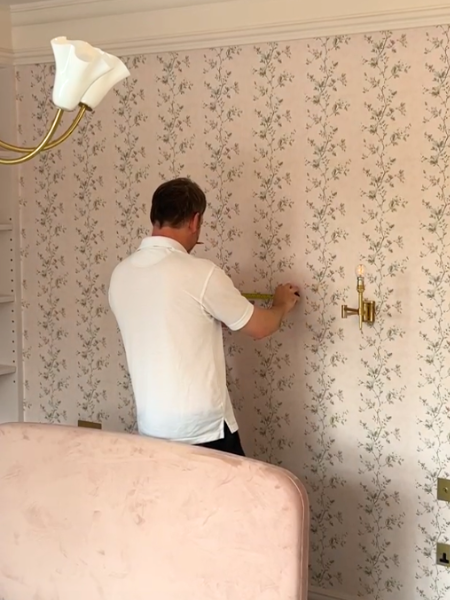
One Complete Window Specification
When we look after both the curtains and the hardware, every part of the window can be specified as one complete design.
The measurements, curtain construction, hardware and installation can all be considered together before anything is made.
That includes details such as the number and type of rings or gliders required, the projection of the brackets, how the curtains will stack and whether the hardware needs to clear features such as a radiator or window furniture.
For homeowners, it creates a much simpler, more joined-up process.
For interior designers, it gives you a specialist team to take care of the technical hardware specification while you remain focused on the wider creative scheme and project.
This joined-up approach is consistent with how specialist hardware systems are themselves specified, with curtain weight, pole length, stack location, bracket style and projection all forming part of the same specification
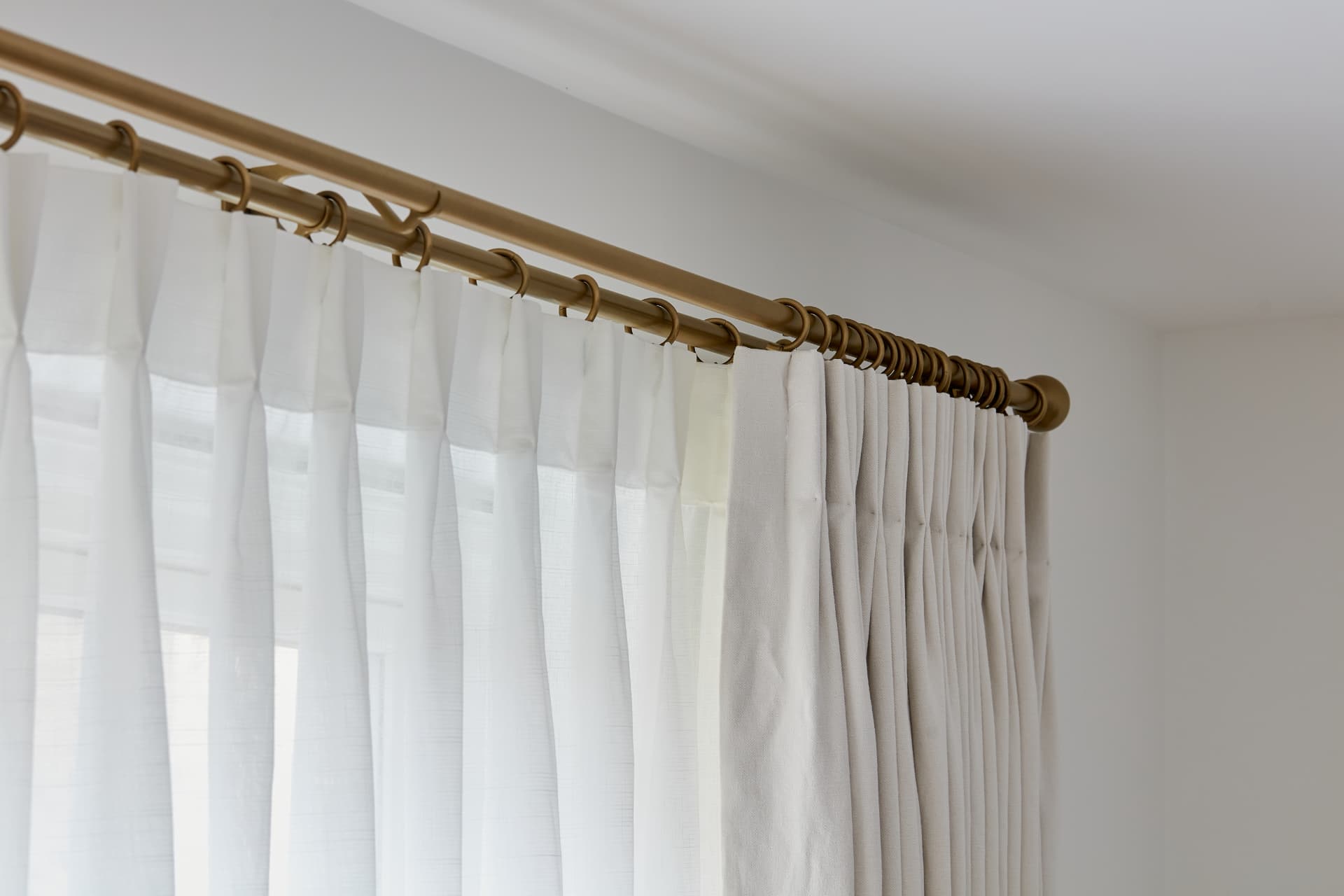
Decorative Or Discreet
Sometimes the pole is an important visual element in its own right, or is deliberately chosen to become a centrepiece of the window design.
Elsewhere, the best hardware blends seamlessly.
We can help source decorative poles, discreet tracks and the associated fittings required to make the treatment work, considering both aesthetics and practical performance.
Motorised Curtain Tracks
Motorisation is usually best considered early, as curtain weight and size, control method, power requirements, recesses and any integration with home automation can all influence the specification.
Early involvement gives us the widest range of options and allows any necessary power, fixing or recess requirements to be planned into the project. If motorisation is introduced later, there will usually still be a suitable solution, but the choices may be more limited.
We can advise on the window-treatment requirements and coordinate with your AV or home automation specialist where necessary.
Complex Windows & Installations
High-level windows, unusual shapes and larger curtain treatments can place additional demands on the hardware. Our specialist knowledge of the hardware market and relationships with leading suppliers mean we can guide you through the options available for more individual installations.
We'll assess the site, guide you through the options and take responsibility for specifying a system that works correctly for the space.
Where a proposed treatment presents a technical consideration, we'll work through it as part of the wider design and bring in experts from our network where we feel it is of benefit.
Specify The Hardware Early
On renovation and refurbishment projects, poles and tracks are best considered before the surrounding finishes are complete.
This is especially important for concealed tracks, motorised systems and treatments that may affect ceilings, joinery, electrical work or fixing positions.
Bringing us in earlier gives us more opportunity to make the hardware work with the architecture rather than having to adapt the design around decisions that have already been made.
Frequently Asked Questions
Do I need a curtain pole or a track?
It depends on the look you want, the type and weight of the curtain, the window, the way the treatment needs to operate and the budget available. We'll recommend the most appropriate option as part of the specification.
I like a curtain pole, but I don't want it to look traditional. What are my options?
A pole doesn't have to create a traditional look. There are contemporary options with clean profiles, understated brackets and a wide choice of finishes, as well as more decorative styles.
We can help you choose the pole, brackets, finials and finish so that the hardware feels right for the wider interior.
What colours and finishes are available for curtain poles?
The choice depends on the collection, but there is a broad range available, including wooden and painted finishes, metallics, satin, polished and more textural options.
We'll consider the finish alongside the fabric and other details within the room so that the hardware feels part of the overall scheme.
Can fittings from different suppliers or collections be combined?
Potentially, but compatibility needs to be checked.
Different poles, brackets, rings and other components aren't automatically interchangeable, so we'll establish what can work together correctly before recommending a combination.
How much space should I leave on either side of the window for the curtains?
That depends on the curtains themselves, including their width, fullness, heading, fabric and the hardware being used.
We can calculate the likely curtain stack as part of the specification and use that to establish how far the pole or track needs to extend beyond the window.
As a rule of thumb, we will often start with an overall pole or track length of around 1.25 times the width of the window. This can then be adjusted depending on the curtain heading, fullness, fabric and the amount of stack space required.
How high should I mount a curtain pole or track?
There isn't one position that works for every window.
We'll consider the proportions of the window and room, the curtain heading and finished length, the hardware and the available fixing positions before recommending where it should sit.
Do curtain poles come in different diameters?
Yes. Different diameters are available, allowing the scale of the pole to be considered in relation to the window, curtains and proportions of the room.
Curtain weight is an important factor because the pole needs to provide adequate support. The visual role of the pole matters too. A more substantial diameter may be appropriate where the hardware is intended to become a feature, while a slimmer profile can help it blend into a wall or ceiling, provided it can comfortably support the finished curtains.
Can a curtain track be concealed?
Yes. Depending on the room and the stage of the project, a track can be recessed into the ceiling or concealed behind a detail such as a fascia or pelmet.
We'll consider how visible you want the hardware to be as part of the overall window design. If you're considering a recessed track, mention this as early as possible so the necessary recess, fixing and surrounding finishes can be planned into the project.
Can you help with bay windows?
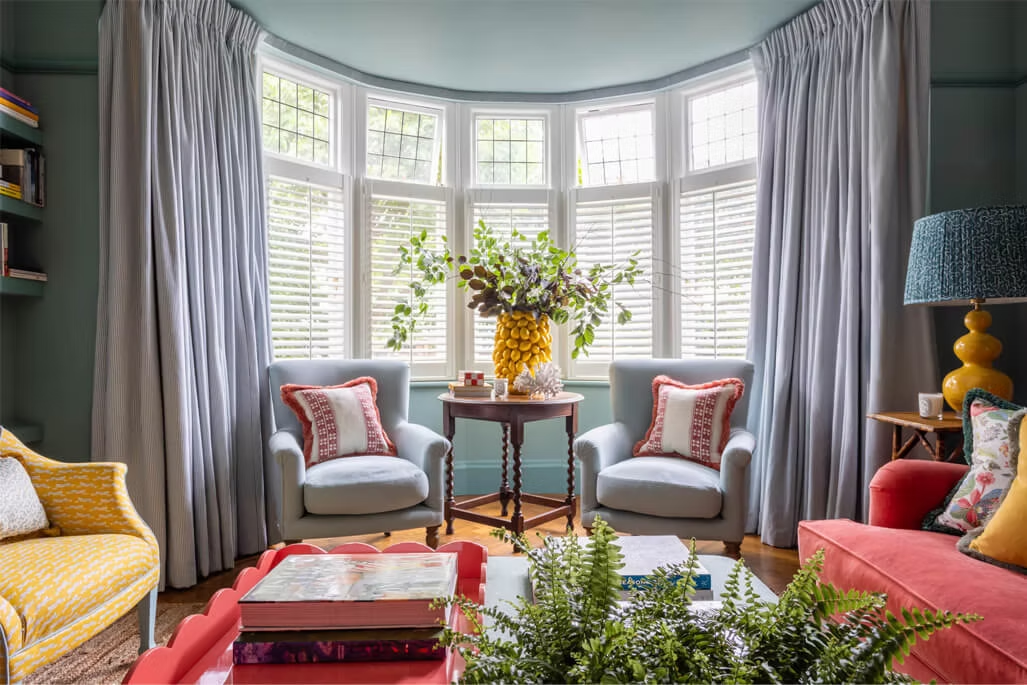
Yes. Specialist poles and tracks can be shaped to follow a bay, depending on the window and the way you want the curtains to operate.
We'll assess the complete window rather than assuming a shaped pole or track is automatically the best answer. If we believe another treatment or hardware solution would work better for the bay, we'll talk you through the alternatives.
Can you help with apex or angled windows?
Yes. We'll assess the shape of the window, the available fixing positions and how you want the curtains to hang and operate before recommending the hardware.
The specification will be developed around the individual architecture rather than trying to make a generic system fit the space.
For some angled or apex windows, one option may be Italian stringing, a traditional corded technique that draws the curtain upwards and to the side rather than horizontally across the window.
Can you supply and install the hardware?
Yes. We can source and professionally fit poles, tracks and associated hardware.
Because we're considering the curtains and hardware together, we can also specify details such as the number of rings or gliders required and the appropriate bracket projection, for example where the curtains need to clear an under-window radiator.
Can you advise my interior designer on the right system?
Yes. Where we're sourcing the hardware for the project, we regularly provide technical advice to interior designers and other project professionals as part of the wider specification.
Can curtain tracks be motorised?
Yes. Suitable treatments can incorporate motorised curtain tracks, with both mains-powered and rechargeable battery-powered systems available depending on the project requirements.
Both mains and rechargeable battery curtain motors are currently available from specialist manufacturers.
Can you work with an existing home automation system?
Yes. We can work around an existing home automation system. What is already in place will influence the motor, control and integration options available, so we'll establish that early and coordinate with your AV or home automation specialist.
Systems we commonly encounter include Lutron, Crestron, Somfy and Rako.
We also have an established relationship with an AV specialist and trained electrician who understands the requirements of motorised curtains and blinds and can support both the electrical and installation elements where required. Having that expertise within our wider network helps us coordinate the process smoothly and keep responsibility clear from specification through to installation.
Can tracks work with unusually shaped windows?
This depends on the shape, fixing conditions and available systems. We'll assess the window and specify an option that works correctly for your space rather than relying on a generic solution.
When should curtain hardware be specified during a renovation?
As early as reasonably possible. Early consideration is particularly important for concealed tracks, motorisation and any treatment that may affect electrical work, joinery, ceilings or surrounding finishes.
Can you replace existing poles or tracks?
Yes, where appropriate. We'll assess what is currently installed and whether it can be retained or whether replacing it would better suit the new curtains and room.
Get The Whole Window Right
The best time to think about the hardware is before the curtain is made, not when it is ready to hang.
Bring us the window, the treatment idea or the complete project and we'll help you specify the right hardware as part of the wider design.